
Health & Health Testing

The German Longhaired Pointer Club monitors the health of the breed as a matter of course and has an appointed breed health coordinator, working with the Kennel Club, to develop the breed health plan.
This plan ensures that any health concerns are identified through evidence-based criteria and provides breeders with information and resources for making balanced breeding decisions that make health a priority.
The GLPC have authored a draft breed health plan, which is currently pending review with the Kennel Club. We will update this page with a link to the plan when finalised.
If you have encountered any health issues with your German Longhaired Pointer, we would be very grateful if you could report them via email to our Breed Health Co-ordinator to help us to monitor the health of the breed – breedhealth@glpclub.org.uk
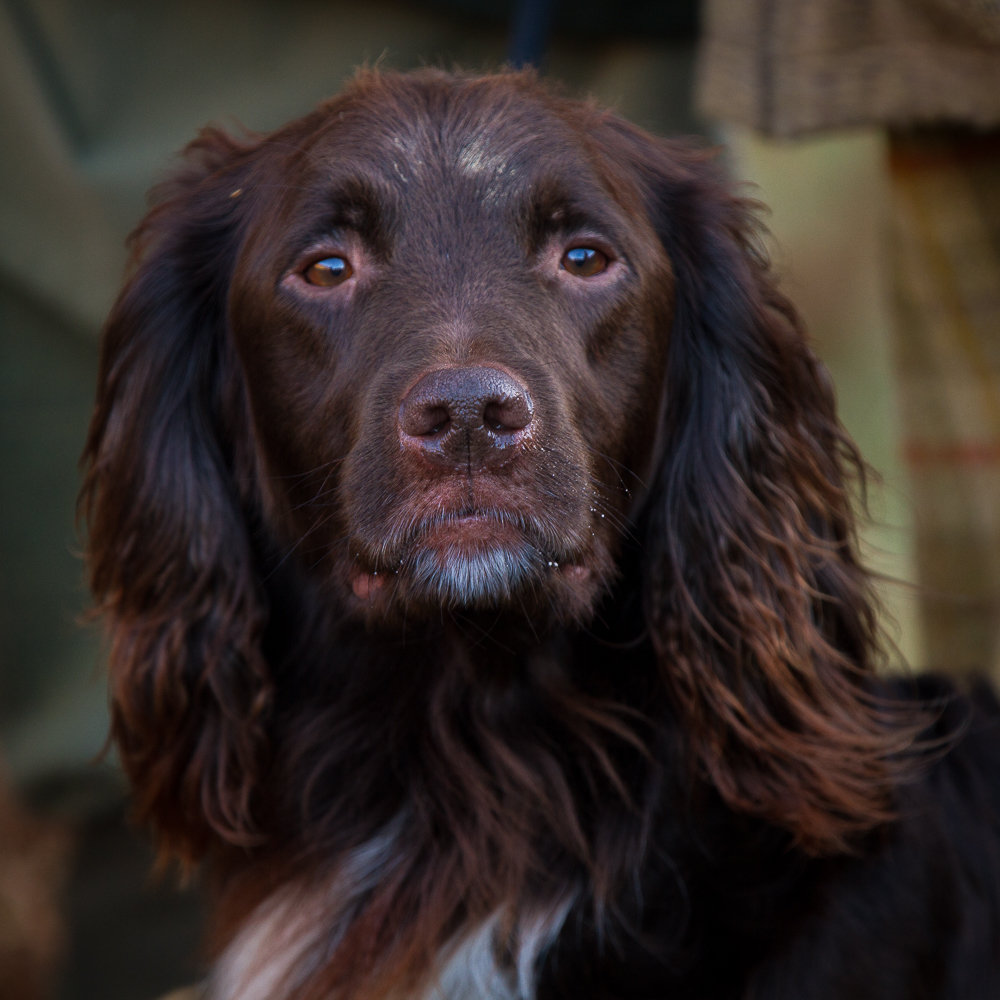
Photo courtesy of Country Shots Photography www.countryshotsphotography.co.uk
HEALTH TESTING
If you are considering breeding from your dog, the German Longhaired Pointer Club is here to support you. The Club holds a list of people who have shown an interest in a GLP puppy.
The club requires members health test their breeding stock prior to mating to include hip scoring, eye testing to include a gonioscopy (screening for Goniodysgenesis) and a heart check, ensuring the results are within an acceptable range.
The club also strongly recommends that DNA testing be carried out for both the E Locus (undesirable yellow/red coat colour).
The club also strongly recommends DNA testing for genetic markers or mutations of Familial Thyroid Follicular Cell Carcinoma (FTFC) – subject to RKC approval.
The RKC has a Health Tests Results Finder Search Page where you can find a short pedigree and BVA Hip scores. Tests required by the Club are not yet linked to the dog profiles but we expect to see this updated in the near future.
HIP SCORING
The BVA scheme uses X-rays to screen for signs of abnormalities (irregular or poorly shaped hip joints) caused by hip dysplasia.
Once an X-ray has been taken by a vet (either your own, or there are special clinics across the country), it is uploaded to the BVA portal and checked by their team for quality control, and then sent to the BVA panel of expert veterinary surgeons. They work in pairs to assess your dog’s hips and agree on a score. This score is then published online via the Health Test Results Finder on the Royal Kennel Club website where applicable, and you will receive a digital certificate from your vet.
For more information about this test, the grading system and how this should be taken into consideration when breeding – click the button below
*More information on Hip Scoring*
GONIOSCOPY
Gonioscopy is a type of eye exam that looks for signs that a dog is affected by a painful and blinding disease known as primary glaucoma. How much the eye is affected is recorded and given as a grade.
This grade can be used to help make health focused breeding decisions that reduce the risk of producing puppies that grow up to be affected by primary glaucoma.
For more information about this test, the grading system and how this should be taken into consideration when breeding please follow the link below
*More Information on Gonioscopy*
DNA TESTS
These are performed by taking a cheek swab from your dog and sending it to a laboratory for testing. Your dog may not require these tests if both its parents have been tested as genetically clear.
Laboklin can test for both E-locus (undesirable yellow/red) coat colour *E Locus Test Here*
and Familial Thyroid Follicular Cell Carcinoma (FTFC) *Thyroid Test Here* via cheek swab.
E-Locus does not affect the health of the breed.
Whilst there are no identified cases of Thyroid Cancer affecting the breed here, there are carriers of the gene in the UK.
In Europe there have been cases but thanks to geneticist Professor Richard Croojmans and his team, a programme of research carried out over a number of years into the histology and hair testing of the breed has resulted in identification of markers/mutations of FTFC and there is now a DNA swab test which breeders can use as a means of identifying the markers for Familial Thyroid Follicular Cell Carcinoma.
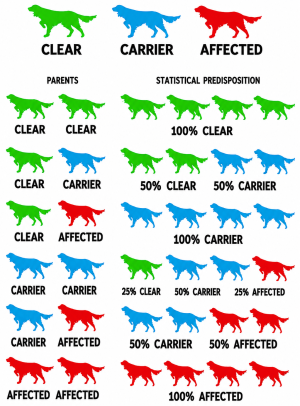
The laboratory tests to see if the dog carries 0 (Clear), 1 (Carrier) or 2 (Affected) copies of the gene it’s looking for.
The long-term goal of DNA testing is to eradicate E-Locus and FTFC from within the breed through informed breeding practices.
To reduce the possibility of producing puppies carrying these genes, both parents should be DNA tested in order to identify their genetic status; the ideal is to breed from genetically clear dogs however, in the case of carriers, these should be bred with clear dogs. Breeding from affected dogs will result in a greater number of affected and carrier puppies within the litter.
If you have any questions regarding any of the above tests please feel free to contact our Breed Health Coordinator – breedhealth@glpclub.org.uk

Copyright © German Longhaired Pointer Club 2023.
Website created by We Raise Digital. os